Simplified Issue Life Insurance
“No medical test, so your mind can rest.”
Fast, No-Exam Coverage
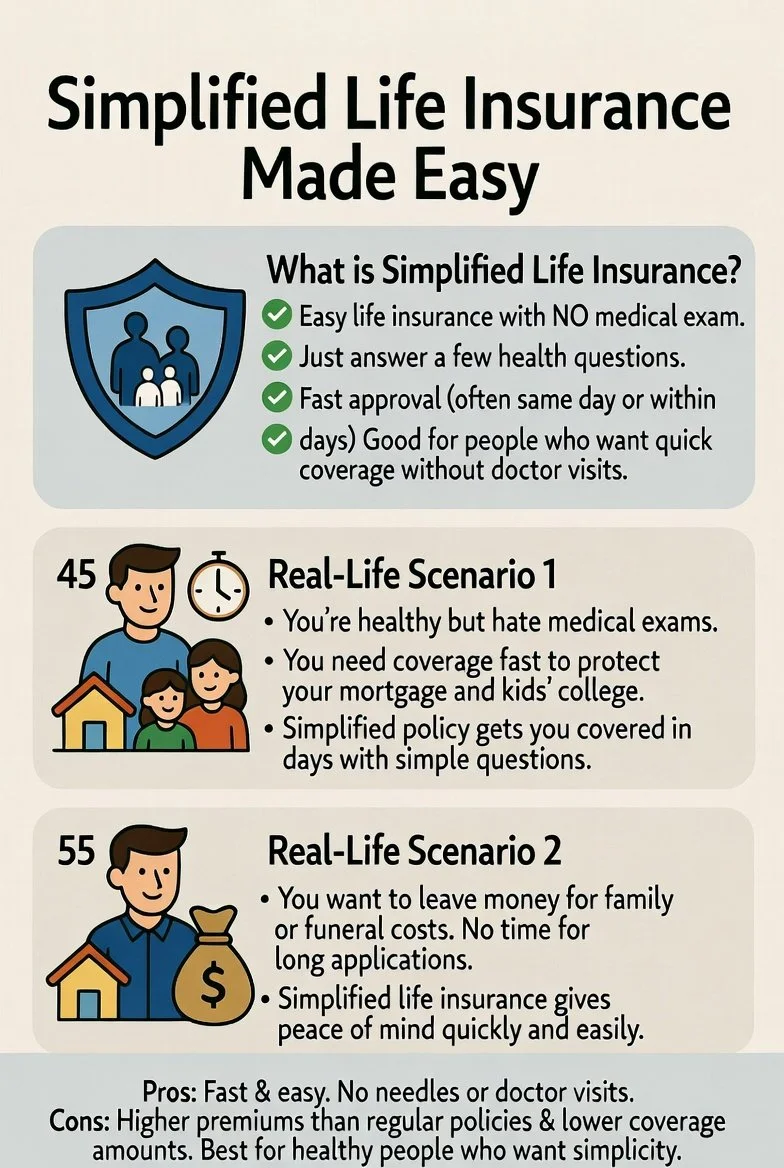
Simplified issue life insurance is a policy that bypasses the traditional medical exam and allows fast approval—often the same day—using a short health questionnaire.
It’s designed for individuals who want quick, hassle-free coverage, including those with minor health concerns or urgent needs. Key benefits include no medical exam, faster approval, and immediate coverage activation, making it ideal for income protection, final expenses, or short-term financial obligations.
Real-world use cases: covering funeral costs, securing temporary protection, or getting insured quickly after a major life event.
Policy Details & Specifications
Policy Type: Term or Whole Life (simplified issue)
Term Length: Typically 10–30 years (term option)
Coverage Range: ~$25,000 to $250,000 (some up to $500,000)
Eligibility: Usually up to age 75; approval not guaranteed
Riders: Accelerated death benefit, optional add-ons
Underwriting Type: No-exam; health questions + database checks
Why Choose Simplified Issue Life Insurance
What makes it better: faster and easier than fully underwritten policies, with fewer questions and no lab work.
Problems it solves: long approval delays, exam avoidance, and limited insurability.
Not ideal for: healthy applicants seeking maximum coverage or lowest premiums, since simplified issue often has higher costs and lower coverage limits.
Buying Guide & Comparison Insight
Compared to traditional term life, simplified issue offers speed and convenience, while fully underwritten policies offer lower premiums and higher coverage. Compared to guaranteed issue, it provides higher coverage but requires health questions.
FAQs
1. Do I need a medical exam?
No—only a health questionnaire is required.
2. How fast is approval?
Often same-day approval and coverage.
3. Is coverage guaranteed?
No—you can still be declined.
4. Is it more expensive?
Yes, typically higher premiums than traditional policies.
5. How much coverage can I get?
Usually lower than fully underwritten policies.